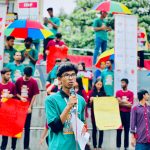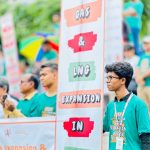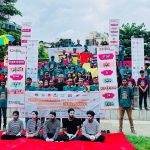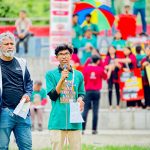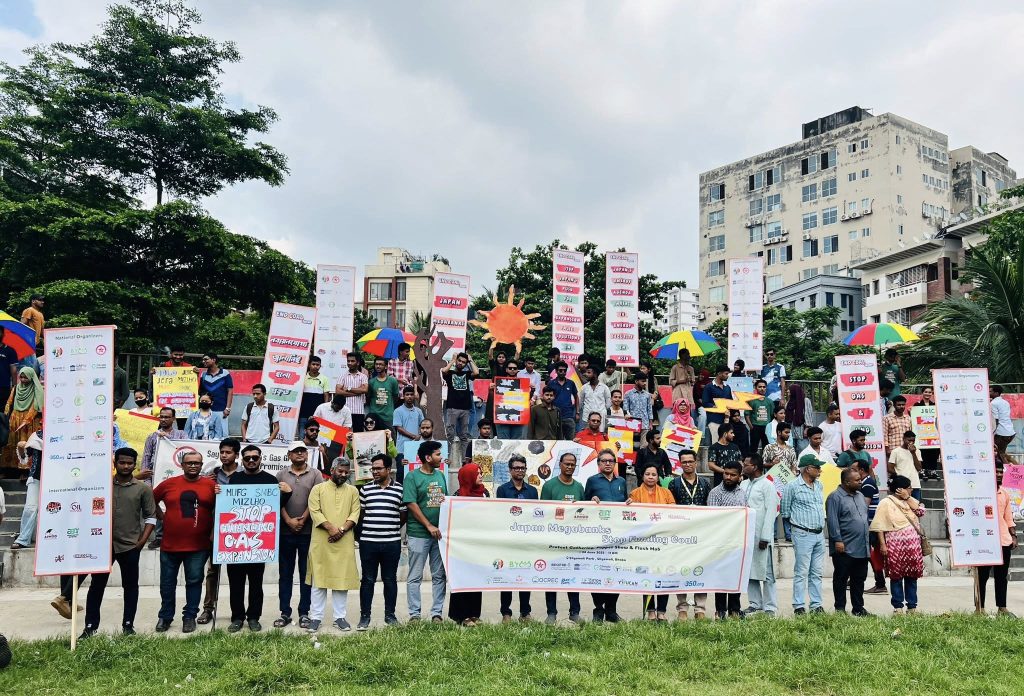
Dhaka, Bangladesh – July 10, 2025 – In a powerful display of solidarity and determination, the Young Climate Action Network (YOUCAN) – along with 17 other progressive organizations, staged a protest at Shyamoli Park today. The demonstration vehemently called for an immediate halt to Japan’s financing of fossil fuel projects, particularly in coal and Liquefied Natural Gas (LNG), within Bangladesh.
The protest, organized under the banner “Protest Rally Demanding an End to Japanese Investment in Coal and LNG in Bangladesh,” aimed to highlight Japan’s significant role in promoting fossil fuels across Asia and its detrimental impact on Bangladesh’s energy future and climate justice.
Speakers at the rally emphasized that Japanese government and private financial institutions, including METI, JBIC, and JICA, are actively investing in fossil fuel projects, such as coal-fired power plants and LNG terminals, in five Asian countries, with Bangladesh being a key recipient. This month of June is particularly critical, as Japanese public and private entities are poised to make crucial investment decisions.
“From coastal displacement to rising emissions, Japan’s dirty energy finance is undermining our right to a just, renewable future,” stated a YOUCAN representative. “We say NO to fossil colonialism and YES to community-led clean energy!”
The Urgency of the Demand
The protest underscored Japan’s substantial contribution to global carbon emissions and its significant financial backing of fossil fuel projects. Notably, Japan has been accused of promoting “false solutions” in Asia, which further exacerbate the climate crisis. Research indicates that over the past decade, Japan has provided $93 billion in support to global oil and gas projects. Between 2020 and 2022, the Japanese government averaged $6.9 billion annually for foreign gas, coal, and oil projects, positioning it as one of the world’s largest public financiers of fossil fuels.
This extensive involvement, spanning both public and private sectors, reinforces fossil fuel dependence and delays the essential transition to renewable energy.
Challenging “False Solutions” and Policy Influence
Activists also voiced strong opposition to Japan’s aggressive promotion of “false solutions” like ammonia, hydrogen, and carbon capture storage. This approach contrasts sharply with G7 allies who have expressed doubts about the efficacy of ammonia and hydrogen in energy systems. Japan’s policy influence at national, sub-regional (ASEAN), and regional (ADB) levels has, in effect, incentivized developing nations to prolong their reliance on fossil fuels by pursuing these “false solutions” instead of directly transitioning to renewable energy systems.
Local Impact: The Chittagong LNG Hub
A significant point of contention raised was the proposal of over 20 LNG power plants and projects in the Chittagong region since 2024, accounting for more than half of all new LNG projects in Bangladesh. These projects are part of the MIDI plan, formulated by JICA, and involve numerous Japanese companies like JERA and Mitsubishi Corporation. The influx of new gas power plants is already leading to the displacement of local communities and disrupting vital coastal activities such as fishing, salt production, and betel leaf cultivation.
A Unified Call for Change
The rally served as a united platform for concerned organizations, including Dhara (ধরিত্রী রক্ষায় আমরা) and 14 other groups, to call upon the Japanese government and its associated agencies to fundamentally alter their policies and operations. The demand is clear: stop financing destruction and invest in renewable, equitable energy for all.
The protestors urged Japan to move away from fossil fuels and actively contribute to the expansion of renewable energy in Bangladesh and other affected nations. The collective voice at Shyamoli Park today resonated with a powerful message.
#YouthForClimateJustice #FossilFreeAsia #YOUCAN #NoMoreCoal #JustTransitionNow.
Media Coverage
The protest at Shyamoli Park, as part of a broader campaign against Japanese fossil fuel investments, has received significant attention from local media outlets, highlighting the growing concern over Bangladesh’s energy future.
- Kalbela: কয়লা ও এলএনজিতে জাপানের বিনিয়োগ বন্ধের দাবিতে প্রতিবাদ সমাবেশ
- Ekattor TV: জাপান সরকার ও অন্যান্য বেসরকারি অর্থলগ্নিকারী প্রতিষ্ঠান কর্তৃক কয়লা ও এলএনজি প্রকল্পগুলোতে বিনিয়োগ বন্ধের দাবিতে প্রতিবাদ সমাবেশ অনুষ্ঠিত হয়েছে।
- RP News24: জাপানের কয়লা ও গ্যাসভিত্তিক প্রকল্পে বিনিয়োগ বন্ধের দাবীতে ঢাকায় সমাবেশ
- BD24.Org: নবায়নযোগ্য জ্বালানিতে বিনিয়োগ বাড়ানোর দাবি: জাপানের কাছে কয়লা ও এলএনজি প্রকল্পে অর্থায়ন বন্ধের আহ্বান
- Sangbad.Net : নবায়নযোগ্য জ্বালানিতে বিনিয়োগ বাড়ানোর দাবি