
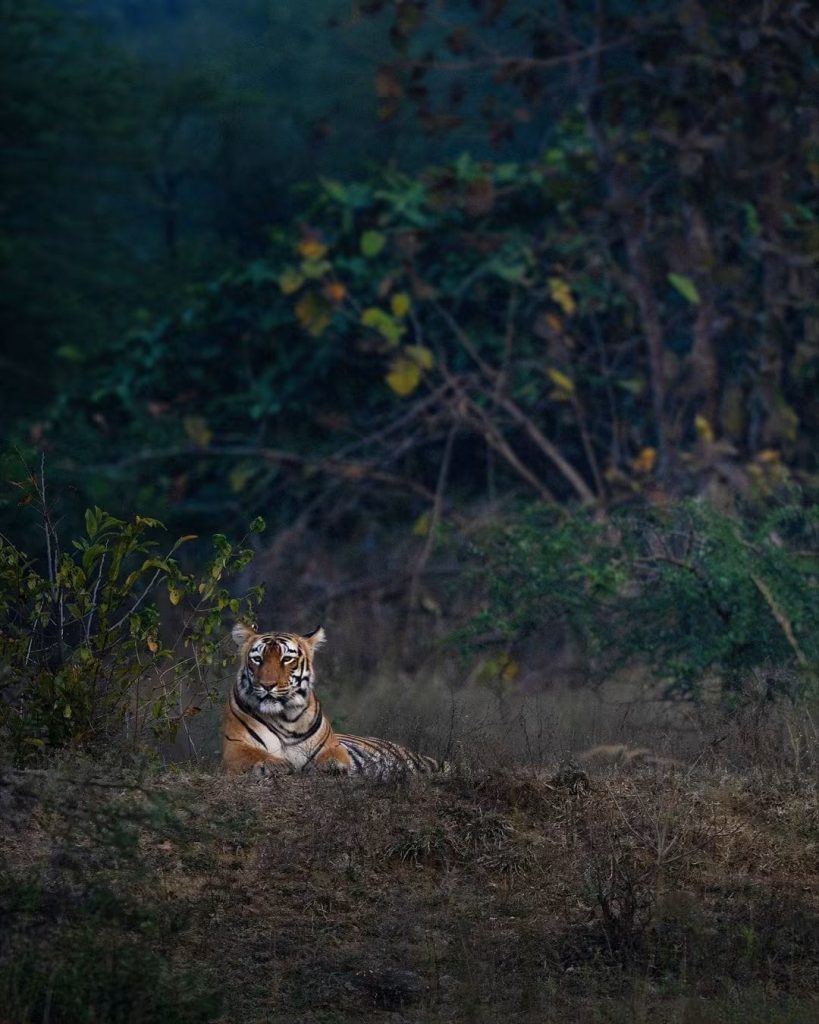
The Roar of the Bengal Tiger, the Sundarbans, and the Urgency of Human-Wildlife Co-existence
By Arafat Islam
The Sundarbans, the world’s largest contiguous mangrove forest, is not merely a scenic sanctuary for the Royal Bengal Tiger and a rich tapestry of biodiversity; it is the vital ecological and economic bedrock of this deltaic region in South Asia. While recent reports of an increasing tiger population within the forest bring a deep sense of relief and optimism, they simultaneously bring to light a complex socio-economic reality-one where the majestic tiger and the marginalized human communities living alongside it are inextricably bound in a shared struggle for survival.
According to data from the Food and Agriculture Organization (FAO) and various environmental studies, approximately 3.5 to 4 million people residing in the coastal belt surrounding the Sundarbans depend directly or indirectly on this mangrove ecosystem for their livelihoods. Research from the Institute of Forestry and Environmental Sciences (IFES) at the University of Chittagong indicates that the Sundarbans contributes over 5.5 billion BDT annually to the national economy in ecosystem services. Among these, the forest’s role in shielding the coastal zone from catastrophic cyclones and storm surges accounts for nearly 3,881 billion BDT, while local livelihood support and resource harvesting contribute 1,161 billion BDT, and tourism adds roughly 414 billion BDT. Although the forest’s direct contribution to the national GDP is often measured narrowly, its role as a macroeconomic shock absorber during severe natural disasters like Cyclones Sidr and Aila-saving billions in potential damages-remains indispensable.
Yet, the primary drivers of this local economy-the honey collectors (mouyals), woodcutters (bawals), and fishermen-live their lives constantly under the shadow of the tiger. Driven by the harsh realities of hunger and poverty, when these individuals venture deep into the forest, encounters with tigers frequently turn into life-or-death struggles. The desperate plea to escape a predator’s attack, balanced against the urgent need to put food on the table for their families, leaves countless people facing fatal casualties or permanent disabilities. Due to administrative and conservation restrictions, these marginalized communities are often unfairly stigmatized as “forest encroachers” or criminals. The reality, however, is that their settlements and cultures have been rooted in a deep reliance on this forest for centuries. The state cannot simply uproot and relocate these millions of people overnight. Forced displacement would not only trigger a massive humanitarian crisis but would also induce profound instability within the nation’s social and economic fabric.
In this context, the relationship between tigers and humans is not merely one of bloody conflict; it is a centuries-old history of delicate co-existence. As a youth and climate-environment advocate from the Global South, this intricate intersection of wildlife conservation and local livelihoods is deeply apparent. Tigers and humans can indeed thrive as mutual counterparts if effective policy-level protections are established to mitigate this friction. To this end, I propose a targeted intervention: the introduction of a specialized “Human-Wildlife Co-existence Insurance” policy. This financial safety net would secure compensation for human lives lost or livestock predated in attacks by tigers or other wildlife. Implementing such policy development, backed by rigorous monitoring and timely execution, is the need of the hour for the Sundarbans region safeguarding tiger populations while insulating vulnerable human lives from devastating economic shocks.
Ultimately, protecting the Sundarbans, securing the free movement of the tiger, and ensuring the survival of its dependent people is not a zero-sum game; it demands a cohesive framework of co-existence. According to policymakers and researchers, the ultimate solution lies not in isolating people from the forest, but in diversifying the coastal economy and integrating modern financial safety nets like human-wildlife co-existence insurance. By fostering alternative income generation activities (AIGAs), expanding eco-friendly aquaculture, and cushioning risks through insurance, this crisis can be successfully navigated. By refusing to pit the roar of the tiger against the survival of humanity, and instead weaving them together as mutual pillars of a shared landscape, lies the true future of our coastlines.