
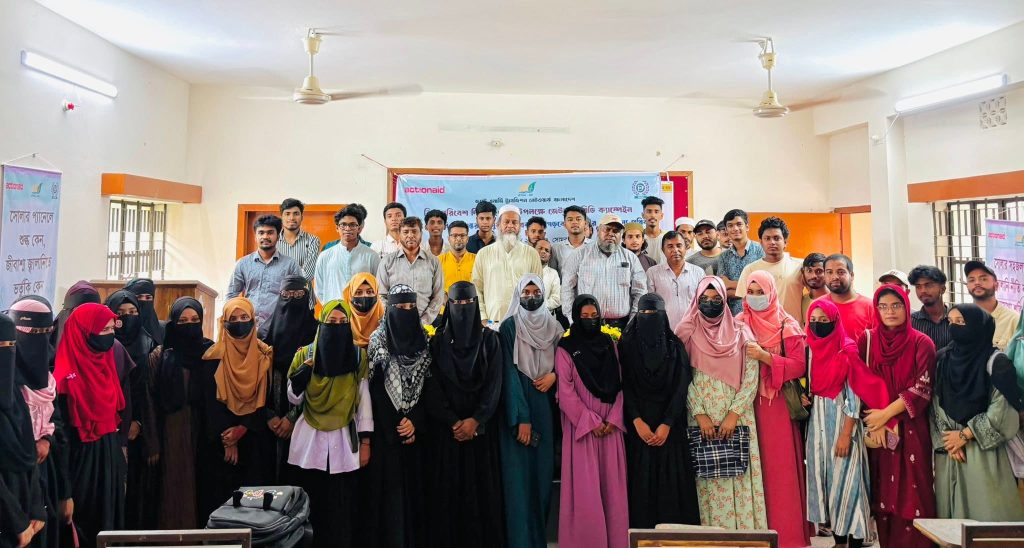
Yudhishtir Chandra Biswas Joins World Environment Day 2026 Discussion on Climate Justice, Renewable Energy, and Youth Participation in Bangladesh’s Energy Future
Young Climate Action Network (YOUCAN) is proud to share that its Founder and Executive Director, Yudhishtir Chandra Biswas, participated as a special guest in the Renewable Energy Transition and Just Energy Transition Campaign, titled “Youth Perspectives for the Future,” held in Habiganj on the occasion of World Environment Day 2026.
Organised by SDM Foundation, ActionAid Bangladesh, and JETNET-BD, the event brought together youth leaders, government officials, development practitioners, and media representatives to discuss climate justice, renewable energy, and the importance of youth participation in shaping a sustainable energy future for Bangladesh.
The programme provided a platform for dialogue on the country’s energy transition and the need to ensure that climate and energy policies reflect the perspectives, priorities, and aspirations of young people.
Representing YOUCAN, Yudhishtir highlighted the importance of meaningful youth participation in energy and climate policymaking, increased investment in renewable energy, and a just transition that leaves no one behind.
World Environment Day 2026: Connecting Environmental Action with Energy Transition
World Environment Day offers an opportunity to reflect on environmental challenges and strengthen collective efforts towards a more sustainable future. The 2026 observance provided a timely context for discussions on renewable energy, climate justice, and the transition towards cleaner energy systems.
Energy transition is an important part of addressing climate change. Moving towards renewable energy sources can help reduce dependence on fossil fuels while creating opportunities to build more sustainable and resilient energy systems.
However, the transition involves more than changing energy sources. It also requires attention to affordability, accessibility, employment, community needs, and the distribution of both benefits and challenges.
The discussion in Habiganj highlighted the importance of approaching the energy transition as both an environmental priority and a question of social equity. Ensuring that communities are considered throughout this process is essential to building public understanding, trust, and support for sustainable energy solutions.
Youth Perspectives on Renewable Energy and Climate Justice
Young people have a significant stake in decisions about the future of energy. The policies and investments made today will influence their environmental conditions, economic opportunities, and quality of life for decades to come.
During the discussion, Yudhishtir emphasised the importance of giving young people meaningful opportunities to participate in energy and climate policymaking.
Youth participation can contribute fresh perspectives, strengthen public awareness, and help connect policy discussions with the experiences and concerns of communities. Young people can also support renewable energy advocacy, community engagement, research, and initiatives that encourage more sustainable practices.
For youth participation to be meaningful, however, opportunities must extend beyond attendance at events. Young people need accessible platforms to share their recommendations, engage with decision-makers, and contribute to the development and implementation of policies.
YOUCAN believes that young people should be recognised not only as those who will inherit the consequences of today’s decisions, but also as active contributors to the solutions being developed now.
Advancing a Just Energy Transition That Leaves No One Behind
A just energy transition seeks to ensure that the shift towards cleaner energy systems is fair, inclusive, and attentive to the needs of workers, communities, and groups that may face particular challenges during the transition.
While renewable energy offers important opportunities for sustainable development, the transition must also consider questions of access, affordability, employment, skills development, and equitable participation.
During the campaign, Yudhishtir highlighted the need for a transition that leaves no one behind. This principle is central to connecting climate action with social justice and inclusive development.
A fair transition requires dialogue among policymakers, communities, civil society, young people, and other stakeholders. It also requires attention to how energy policies affect different groups and whether the benefits of new technologies and investments are accessible to those who need them.
For Bangladesh, strengthening this approach can help ensure that progress towards cleaner energy is accompanied by efforts to expand opportunities, address inequalities, and protect community interests.
Increasing Investment in Renewable Energy
Another key message highlighted by Yudhishtir was the importance of increased investment in renewable energy.
Expanding renewable energy requires coordinated efforts involving public institutions, private-sector actors, development partners, researchers, and communities. Investment can support the development and adoption of cleaner technologies, strengthen energy infrastructure, and create opportunities for innovation and employment.
Policy support, technical capacity, public awareness, and effective planning are also important for enabling renewable energy initiatives to grow.
Young people can contribute to this process by promoting environmental awareness, exploring innovative ideas, engaging in research, and advocating for policies that support sustainable energy development.
A transition towards renewable energy must be supported by both practical action and inclusive decision-making. Connecting investment with social and environmental priorities can help strengthen the long-term benefits of energy transition.
Leadership and Collaboration Across Sectors
The event was chaired by Md. Abdul Baki, Assistant Director, Department of Youth Development, Habiganj, while Md.Amir Ali, Deputy Director, Department of Youth Development, Habiganj, attended as the Chief Guest.
The special guests included Md. Ataur Rahman, District Coordinator of BRAC Habiganj, and Md. Moshahid Majumdar, Founder and Director of Udbhavani Science Club.
The participation of representatives from government, development organisations, youth initiatives, and civil society created an opportunity to bring different perspectives into a shared conversation about climate action and energy transition.
Cross-sector collaboration is important because the challenges associated with climate change and energy systems cannot be addressed by a single organisation or institution. Cooperation can help connect policy priorities with community experiences, technical knowledge, and youth-led initiatives.
YOUCAN values such opportunities for dialogue and exchange, recognising that progress towards climate justice requires collective effort and meaningful participation from stakeholders across society.
YOUCAN’s Commitment to Climate Advocacy and Youth Empowerment
As a youth-led network working to advance climate action and environmental justice, YOUCAN is committed to strengthening young people’s knowledge, leadership, and participation in discussions that shape environmental and development priorities.
The organisation recognises that climate advocacy must connect environmental concerns with questions of equity, inclusion, accountability, and sustainable development.
Engagement in conversations on renewable energy and just transition reflects the importance of addressing climate change through a broader lens—one that considers not only emissions and technologies but also people’s rights, opportunities, and well-being.
Yudhishtir Chandra Biswas’s participation in the Habiganj campaign represented YOUCAN’s commitment to bringing youth perspectives into these important discussions and encouraging stronger recognition of young people as contributors to Bangladesh’s energy future.
YOUCAN appreciates SDM Foundation, ActionAid Bangladesh, and JETNET-BD for organising the campaign and creating a platform for dialogue on renewable energy, climate justice, and youth leadership.
Looking Ahead: Building a Sustainable and Inclusive Energy Future
Bangladesh’s transition towards a more sustainable energy future will require continued investment, effective policies, public engagement, and collaboration across sectors. Ensuring that young people can meaningfully participate in this process is equally important.
The discussions in Habiganj reinforced the value of connecting renewable energy development with climate justice and the principle that no community should be left behind.
YOUCAN remains committed to supporting youth-led advocacy, promoting environmental awareness, and encouraging meaningful youth participation in climate and energy policymaking.
As the organisation continues to engage with stakeholders and youth networks, it looks forward to contributing to conversations and initiatives that advance a cleaner, fairer, and more resilient future for Bangladesh.
A just energy transition must be more than a shift in technology—it must be a collective commitment to sustainability, equity, and meaningful participation. By empowering young people and ensuring that every community has a voice, Bangladesh can move towards an energy future that works for both people and the planet.
YOU CAN CHANGE THE WORLD.
For more : https://www.facebook.com/share/14vkYXuAEm8/