
Rashed Jia Rana Joins a National Dialogue on Positioning Just Transition as a Driver of Competitiveness, Productivity, and Market Access for Enterprises in Bangladesh
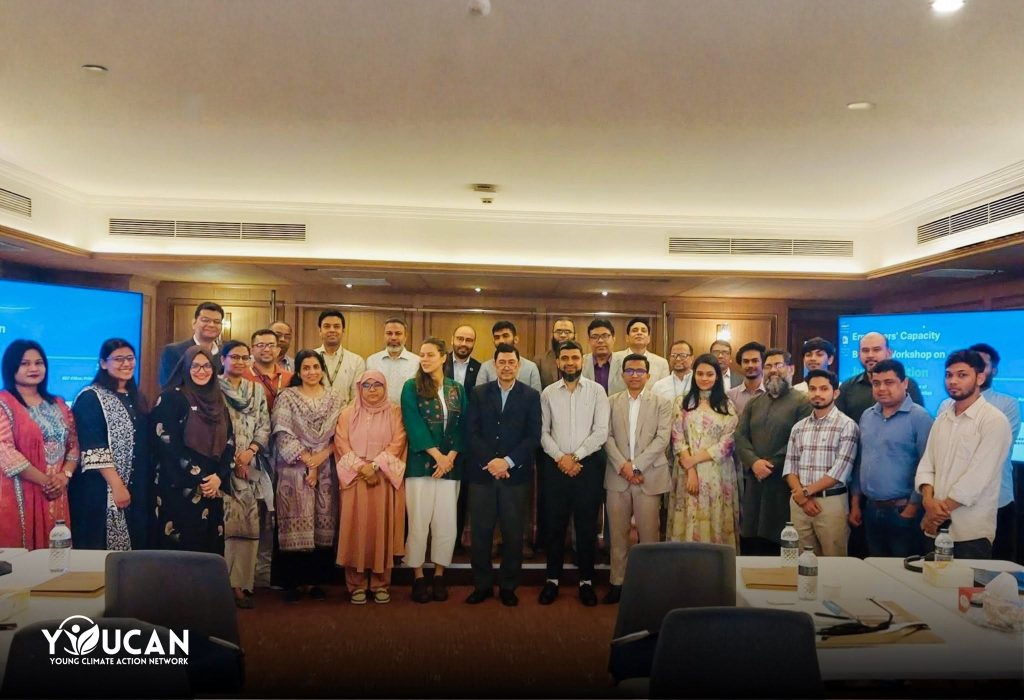
Young Climate Action Network (YOUCAN) is pleased to share that its Deputy Executive Director, Rashed Jia Rana, participated in the Employers’ Capacity Building Workshop titled “Just Transition: Positioning Just Transition as a Driver of Competitiveness, Productivity and Market Access for Enterprises in Bangladesh.” The workshop was jointly organised by the Bangladesh Employers’ Federation (BEF) and the International Labour Organization (ILO) in Dhaka on 19 May 2026.
The workshop brought attention to the growing importance of a just transition in Bangladesh’s evolving economic and industrial landscape. As industries respond to climate change, global sustainability expectations, and the shift towards a low-carbon economy, the relationship between environmental responsibility, decent work, business competitiveness, and inclusive economic development is becoming increasingly significant.
Rashed’s participation reflects YOUCAN’s continued engagement in discussions surrounding just energy transition, sustainable development, and the meaningful involvement of young people in shaping a fairer and more sustainable future.
Understanding Just Transition in Bangladesh’s Economic Context
A just transition refers to the process of moving towards a more environmentally sustainable economy while ensuring that workers, communities, businesses, and other affected groups are considered throughout the transformation.
The transition to a low-carbon economy involves changes in energy production, industrial operations, business practices, and employment patterns. While these changes can create opportunities for innovation, investment, and new forms of employment, they also require careful planning to ensure that the benefits and challenges of the transition are addressed fairly.
For Bangladesh, where industrial development, employment generation, export competitiveness, and climate vulnerability intersect, just transition is an important consideration in building a resilient and sustainable economy.
The workshop’s focus on competitiveness, productivity, and market access highlighted the relevance of just transition not only as an environmental priority but also as an economic and business consideration. As sustainability becomes increasingly important in global markets, enterprises must consider how responsible production, resource efficiency, workforce development, and environmental performance can contribute to their long-term resilience.
Connecting Climate Responsibility with Business Competitiveness
The shift towards sustainable business practices presents both challenges and opportunities for enterprises in Bangladesh. Businesses are increasingly operating in a global environment where environmental standards, supply-chain expectations, and responsible production practices can influence their ability to compete and access markets.
A well-planned transition can encourage enterprises to explore cleaner technologies, improve resource efficiency, strengthen workplace practices, and develop more sustainable business models. These changes can contribute to productivity while supporting broader environmental objectives.
However, achieving these outcomes requires collaboration among employers, workers, policymakers, development partners, civil society, and other stakeholders. Businesses need appropriate knowledge, institutional support, investment opportunities, and practical guidance to navigate changing sustainability expectations.
Discussions such as those held during the Employers’ Capacity Building Workshop provide opportunities to examine how just transition can be incorporated into enterprise development while considering the wider social and economic implications of the transition.
For YOUCAN, these conversations are particularly relevant because climate action must be connected with the realities of employment, livelihoods, economic development, and social equity.
YOUCAN’s Continued Engagement in Just Energy Transition
For the past two years, YOUCAN has been working on issues related to just energy transition, recognising the importance of ensuring that the move towards cleaner energy systems is inclusive, equitable, and responsive to the needs of people and communities.
The organisation views the transition as more than a technological shift. It also involves questions about who benefits from new opportunities, how workers and communities are supported through economic changes, and how decision-making processes can become more inclusive.
As energy systems evolve, the future of employment, industrial development, and climate responsibility becomes increasingly interconnected. Meaningful progress therefore requires approaches that consider environmental sustainability alongside economic opportunity and social well-being.
YOUCAN’s engagement in the workshop reflects its interest in connecting ongoing climate and energy advocacy with wider conversations about enterprise development, workforce considerations, and sustainable economic transformation.
By participating in such dialogues, the organisation seeks to remain engaged with the different perspectives that shape the just transition agenda in Bangladesh.
Why Youth Perspectives Matter in the Just Transition
Young people will experience the long-term consequences of decisions made during today’s energy and economic transitions. They will also contribute to the workforce, innovation, entrepreneurship, and community leadership needed to advance sustainable development.
Youth participation is therefore important in discussions about how Bangladesh can move towards a low-carbon economy while creating opportunities for future generations.
Young people can contribute perspectives on climate justice, emerging employment opportunities, skills development, renewable energy, and the need for inclusive policies. Their engagement can also help connect national discussions with the aspirations and concerns of communities that will experience the effects of the transition.
For a just transition to be genuinely inclusive, youth perspectives should be considered alongside those of employers, workers, policymakers, and other relevant stakeholders. Meaningful participation can help broaden discussions and ensure that the needs of future generations remain part of the transition process.
YOUCAN believes that young people should have opportunities to contribute to these conversations—not only as advocates for climate action but also as active participants in shaping the economic and social systems of the future.
Collaboration for a Fair and Sustainable Economic Future
The challenges associated with climate change and economic transformation cannot be addressed by any single institution or sector. Building a just transition requires cooperation among government institutions, employers’ organisations, workers’ representatives, development partners, civil society organisations, and youth-led networks.
Employers play an important role in translating sustainability objectives into workplace practices, business strategies, and industrial operations. At the same time, policymakers and other stakeholders can help establish enabling conditions for a transition that supports environmental goals while considering employment, livelihoods, and economic resilience.
Dialogue among these groups can help identify shared priorities, improve understanding of emerging challenges, and explore practical approaches to sustainable development.
YOUCAN recognises the value of engaging across sectors to strengthen the connection between climate advocacy and the broader economic decisions that influence Bangladesh’s future.
The organisation remains committed to promoting youth engagement, climate justice, and inclusive approaches to the transition towards sustainable energy and economic systems.
Looking Ahead: Advancing a Just Transition That Leaves No One Behind
The Employers’ Capacity Building Workshop provided an opportunity to discuss the relevance of just transition within Bangladesh’s business and economic context. Rashed Jia Rana’s participation reflects YOUCAN’s continued commitment to engaging with discussions that connect climate responsibility, sustainable enterprise development, and inclusive economic transformation.
As Bangladesh continues to navigate the transition towards a low-carbon future, the challenge will be to ensure that environmental progress is accompanied by fair opportunities, responsible business practices, and meaningful participation from different groups in society.
A successful just transition must recognise that economic competitiveness and environmental sustainability can be pursued together, while also paying attention to workers, communities, and young people whose futures are shaped by these changes.
YOUCAN appreciates the Bangladesh Employers’ Federation and the International Labour Organization for jointly organising this workshop and contributing to dialogue on just transition in Bangladesh.
The organisation looks forward to continued engagement and collaboration with stakeholders working towards a future where climate action, decent work, sustainable economic growth, and social justice reinforce one another.
A just transition is not only about changing how we produce and use energy—it is about ensuring that the journey towards a sustainable future creates fair opportunities and leaves no one behind.
YOU CAN CHANGE THE WORLD.
For more : https://www.facebook.com/share/p/1EUL32Q3fT/