
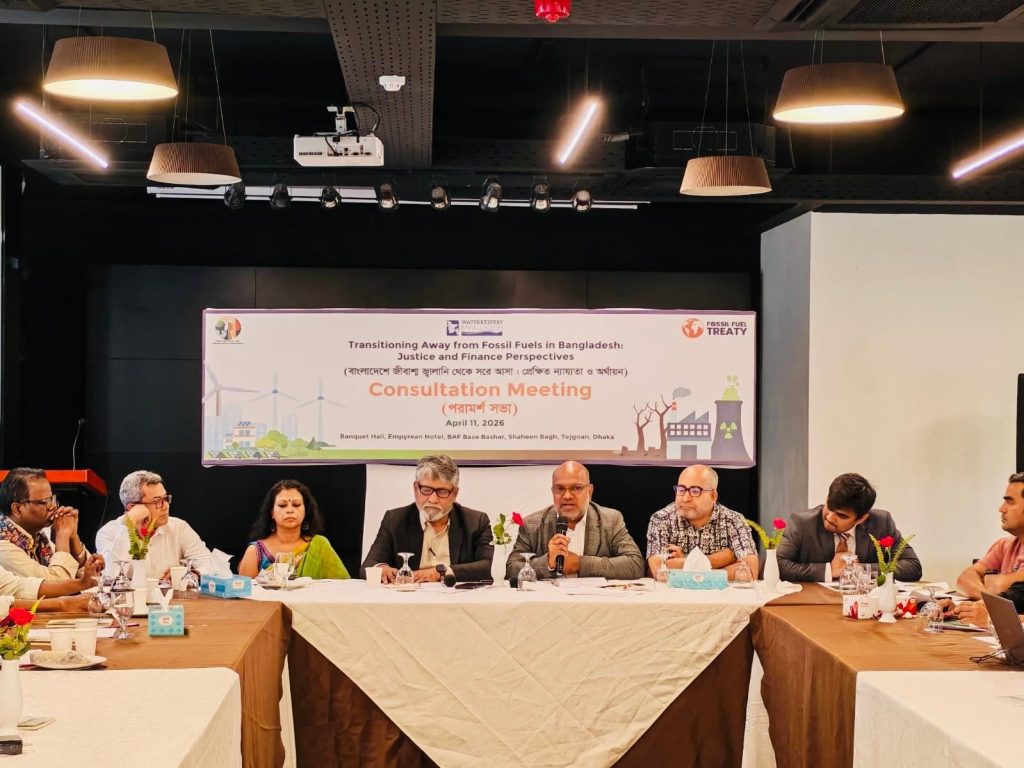
Executive Director Yudhishtir Chandra Biswas Highlights Justice, Inclusive Opportunities, and Climate Finance in Advancing a Just Energy Transition
Young Climate Action Network (YOUCAN) participated in the consultation titled “Transitioning Away from Fossil Fuels in Bangladesh: Justice and Finance Perspectives,” held on 11 April 2026 at Empyrean Hotel, Dhaka.
The consultation was jointly organised by Dhoritry Rokhhay Amra (DHORA), Waterkeepers Bangladesh, and the Fossil Fuel Treaty Initiative, bringing together key stakeholders to advance dialogue on the justice, financing, and social dimensions of Bangladesh’s transition away from fossil fuels.
Representing YOUCAN, Executive Director Yudhishtir Chandra Biswas contributed a youth-centred perspective on the importance of ensuring that the energy transition creates fair opportunities and inclusive benefits for all.
During the discussion, Yudhishtir emphasised:
“Justice is not only about responsibility, but also about opportunity ensuring that the transition creates inclusive benefits for all.”
His message highlighted a central principle of a just energy transition: moving towards a sustainable energy future must involve not only reducing dependence on fossil fuels, but also creating pathways that support people, communities, and equitable development.
Bringing Justice into the Energy Transition
Transitioning away from fossil fuels is an important part of addressing climate change and building more sustainable energy systems. However, the process involves complex social and economic considerations that must be addressed alongside environmental objectives.
A just energy transition seeks to ensure that the shift towards cleaner energy is fair, inclusive, and responsive to the needs of people affected by changes in energy production, employment, investment, and development.
For Bangladesh, these considerations are particularly significant as the country seeks to balance its development priorities with climate action and long-term energy sustainability.
The consultation provided a platform to examine how justice can be integrated into transition pathways, ensuring that environmental progress is accompanied by meaningful opportunities for communities and different groups across society.
YOUCAN recognises that the success of the energy transition should not be measured solely by changes in energy sources. It should also be reflected in whether the transition supports equitable development, protects livelihoods, and enables people to participate meaningfully in decisions that shape their future.
Climate Finance: Turning Commitments into Action
Finance is a critical component of transitioning towards cleaner and more sustainable energy systems. Developing and expanding renewable energy infrastructure, supporting technological change, and addressing the wider impacts of the transition require appropriate financial resources and effective investment strategies.
For Bangladesh and other climate-vulnerable developing countries, access to adequate and accessible climate finance is particularly important. Financial support can help strengthen renewable energy development, improve infrastructure, and address some of the economic challenges associated with moving away from fossil fuels.
However, financing the transition also requires attention to how resources are allocated, who benefits from investments, and whether financial mechanisms respond to the needs of affected communities.
The consultation’s focus on justice and finance highlighted the importance of connecting the financial dimensions of energy transition with principles of fairness and inclusion.
YOUCAN believes that climate finance should help enable practical, people-centred transition pathways—supporting environmental sustainability while creating opportunities for communities and future generations.
Why Inclusive Opportunities Matter
An energy transition that prioritises environmental sustainability must also consider its wider implications for society.
Changes in energy systems can influence employment, livelihoods, investment patterns, and local development. Ensuring that these changes create inclusive benefits requires careful planning, collaboration, and meaningful participation from the people affected.
Young people have a particularly important stake in this process. Decisions made today will influence their future employment opportunities, living conditions, and access to sustainable energy systems.
Youth participation can help bring intergenerational perspectives into energy policy discussions and encourage approaches that consider both immediate development needs and long-term environmental responsibilities.
Yudhishtir Chandra Biswas’s contribution reflected the importance of understanding justice not only in terms of responsibility for climate change, but also in terms of the opportunities created through the transition.
For YOUCAN, a fair energy transition must create space for young people and communities to contribute to shaping policies, benefit from emerging opportunities, and participate in building a sustainable future.
YOUCAN’s Commitment to Just Energy Transition
As a youth-led climate and environmental network, YOUCAN remains committed to advancing climate justice, promoting youth engagement, and supporting inclusive approaches to sustainable energy development.
The organisation recognises that transitioning away from fossil fuels requires collaboration among policymakers, civil society organisations, researchers, communities, youth networks, and other stakeholders. Dialogue among these groups can help identify shared priorities, strengthen understanding, and encourage practical approaches to the challenges of energy transition.
YOUCAN’s participation in the consultation reflects its continued engagement with discussions on the future of Bangladesh’s energy systems and the importance of ensuring that the transition is both environmentally responsible and socially equitable.
By bringing youth perspectives into these conversations, YOUCAN seeks to contribute to a transition that recognises the needs of present communities while protecting the interests of future generations.
Looking Ahead: A Fair and Finance-Backed Energy Future
The consultation on “Transitioning Away from Fossil Fuels in Bangladesh: Justice and Finance Perspectives” reinforced the importance of addressing justice and financing together when developing pathways towards a sustainable energy future.
A successful transition requires more than ambitious environmental goals. It needs accessible finance, inclusive decision-making, practical planning, and opportunities that enable people and communities to participate in and benefit from the transformation.
YOUCAN appreciates Dhoritry Rokhhay Amra (DHORA), Waterkeepers Bangladesh, and the Fossil Fuel Treaty Initiative for jointly organising the consultation and contributing to dialogue on these critical issues.
The organisation remains committed to supporting youth-led climate advocacy and promoting a just energy transition grounded in fairness, meaningful participation, and sustainable development.
A just energy transition must do more than move away from fossil fuels. It must create inclusive opportunities, mobilise adequate climate finance, and ensure that the benefits of a sustainable future are shared fairly across society.
YOU CAN CHANGE THE WORLD.
For more : https://www.facebook.com/share/p/1HUdN6K5Ni/