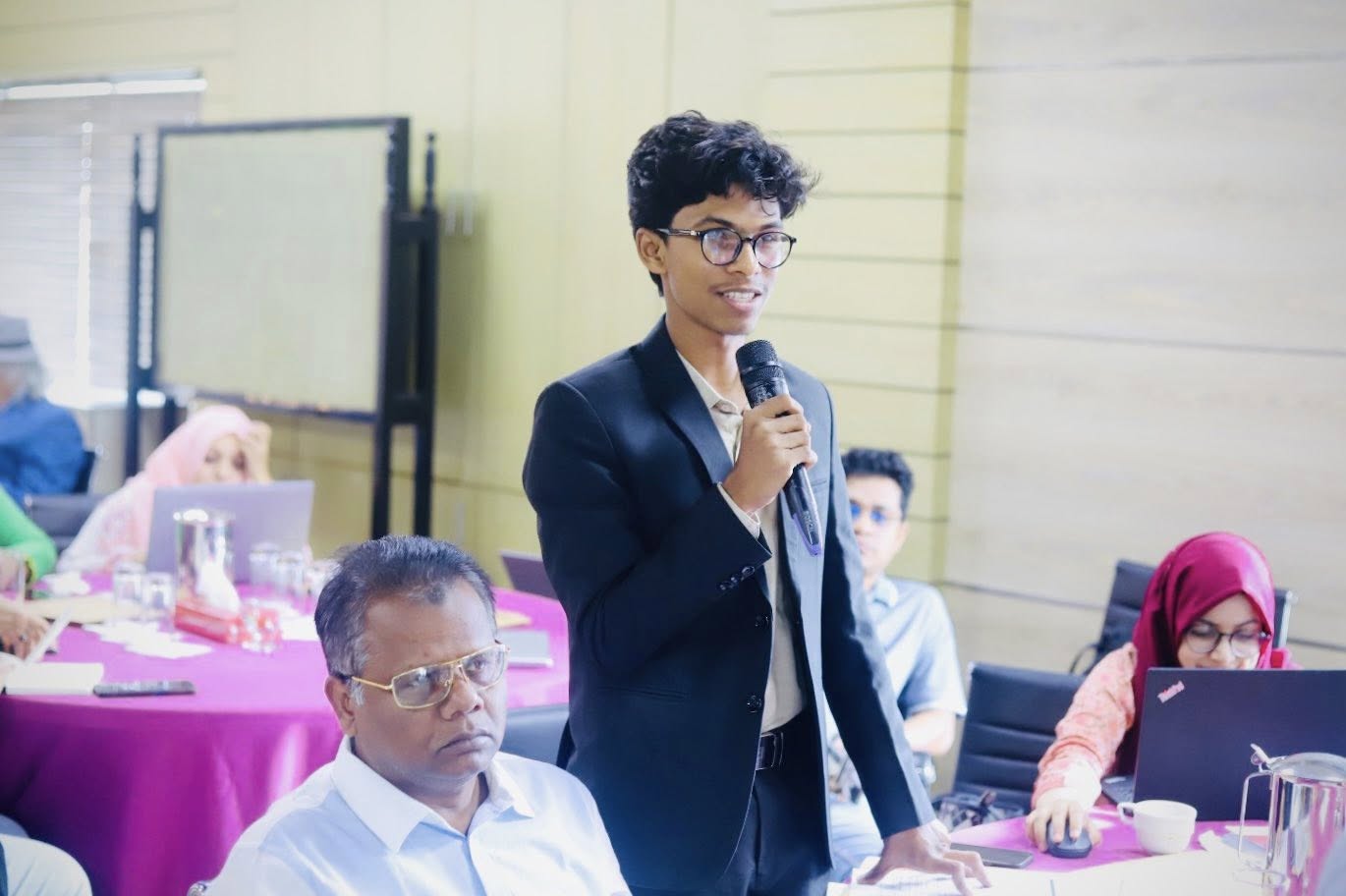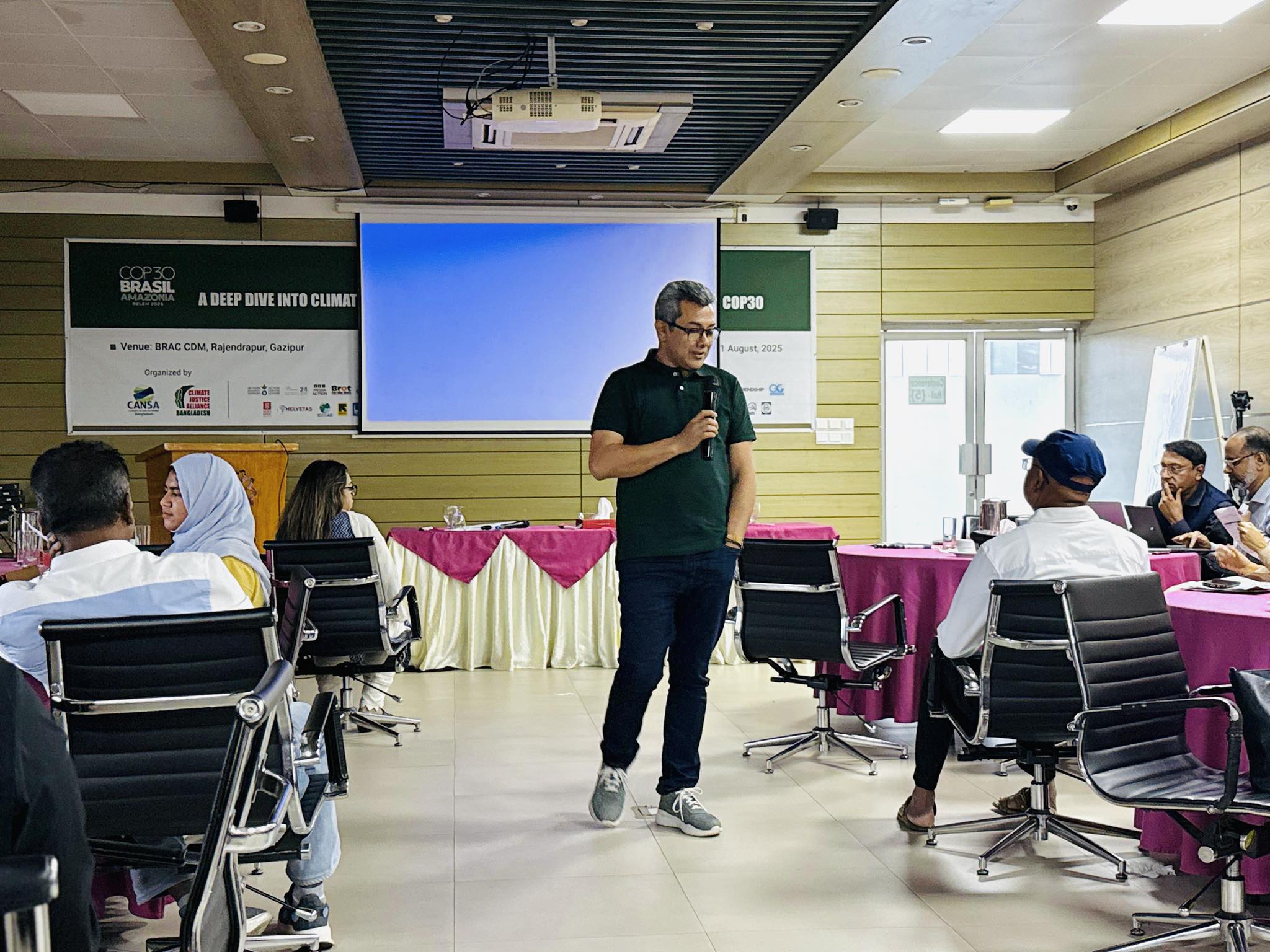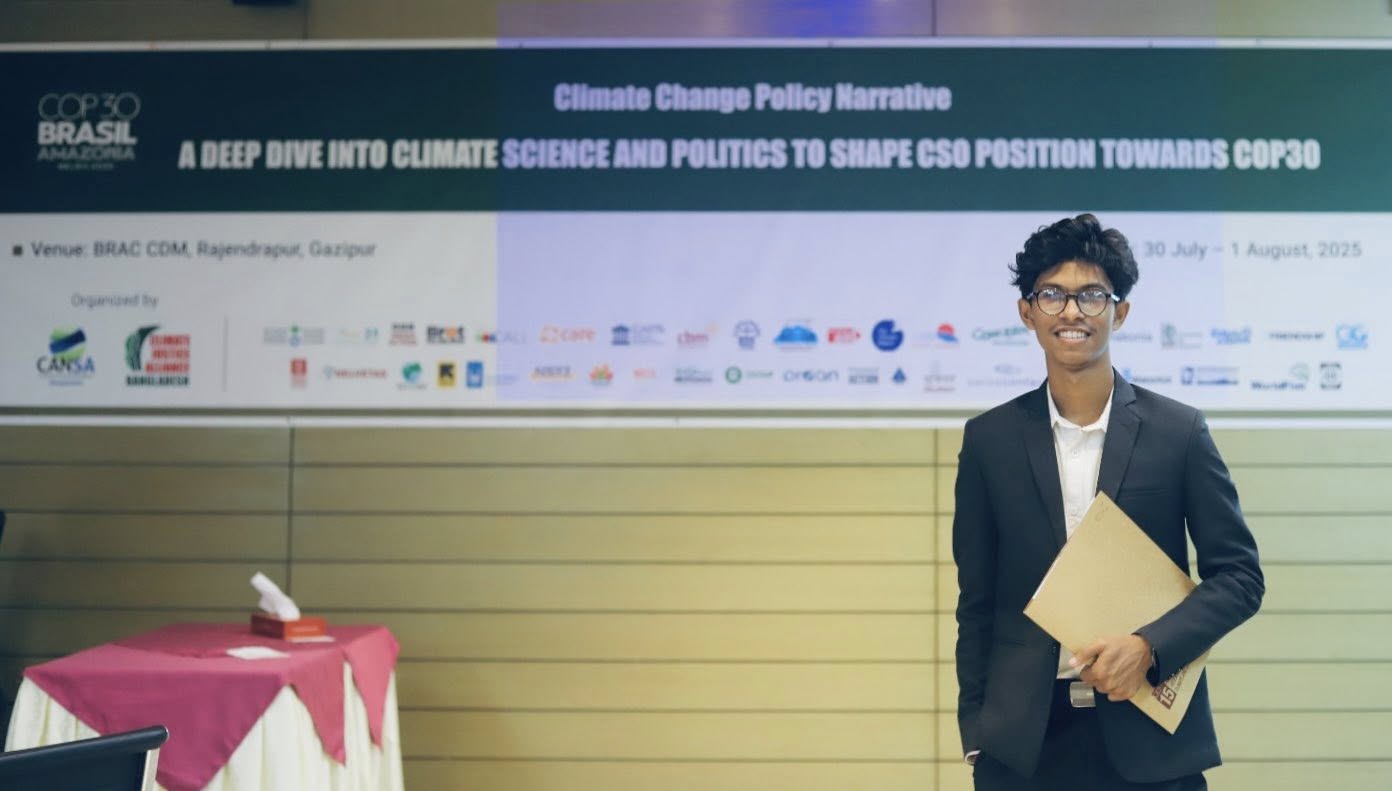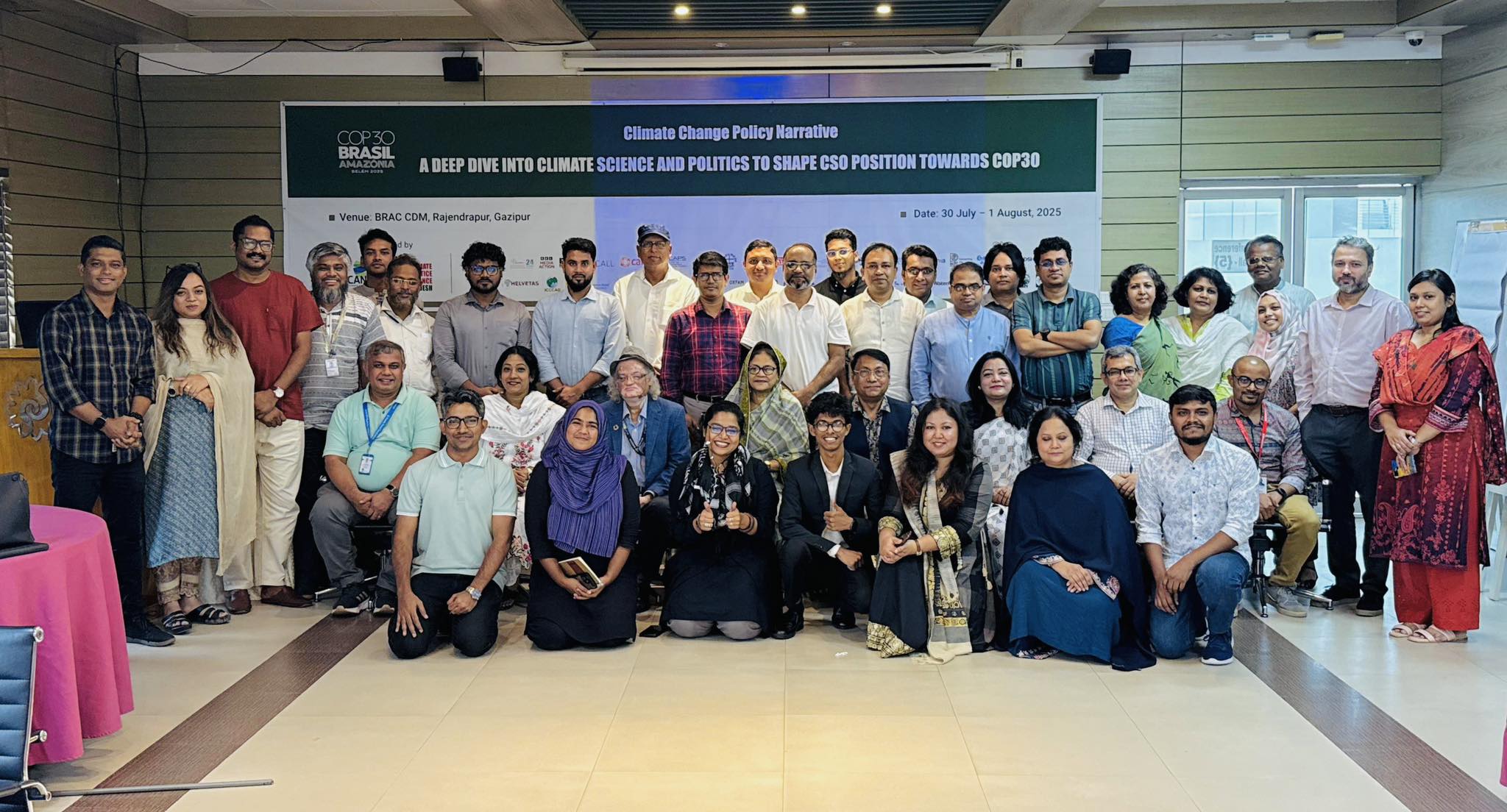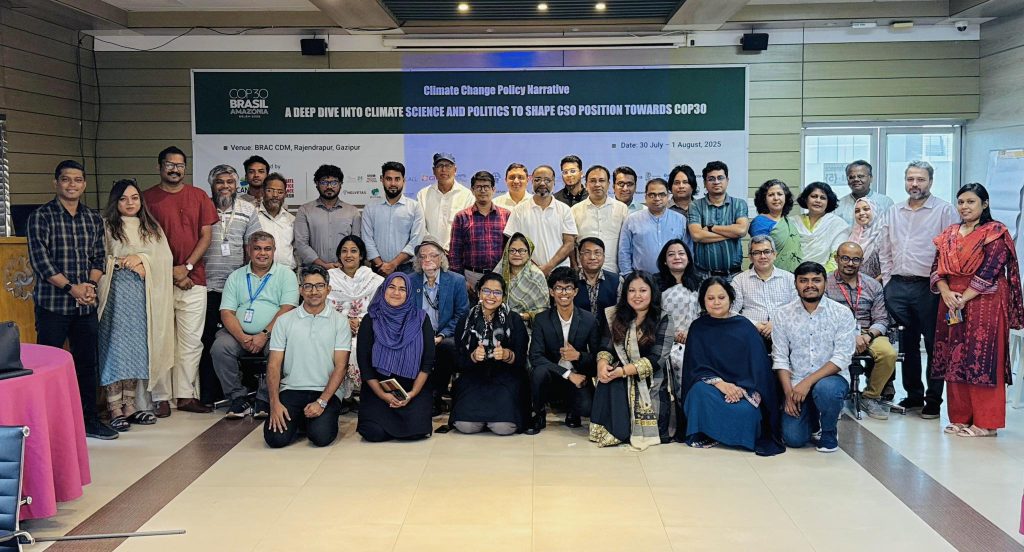
The Young Climate Action Network (YOUCAN) marked a significant milestone in its national advocacy journey, taking a seat at the table of Bangladesh’s leading climate policy and civil society actors at the Strategy Workshop on Climate Change Policy Narrative, held from July 30 to August 1, 2025, at BRAC CDM. This intensive three-day residential workshop was organized by CPRD, Climate Justice Alliance Bangladesh (CJA-B), and CANSA Bangladesh, convening over 40+ representatives from CSOs, INGOs, and NGOs to align strategies for the upcoming COP30 negotiations in Brazil.
As the youngest delegate in the room, YOUCAN’s Executive Director contributed fresh perspectives grounded in grassroots mobilization, intergenerational equity, and climate justice, ensuring the voice of Bangladesh’s youth was present in shaping national and international climate narratives.
A Deep Dive into Climate and Policy Complexity
The workshop kicked off with reflections on the evolving climate crisis, guided by experts like Dr. Ahsan Uddin Ahmed, who unpacked the science behind the IPCC’s Sixth Assessment Report. Sessions delved into themes ranging from the human dimensions of climate change—gender, health, and displacement—to climate impacts on indigenous communities, led by voices like Shekhar Chakraborty of HEKS/EPER.
Discussions around climate justice and humanitarian action followed, where the disconnect between national response systems and community needs was examined with brutal honesty by speakers like Shahnawaz Whara (Concern Worldwide) and Ahsanul Wahed (Manusher Jonno Foundation), spotlighting the need for locally informed adaptation and resilience building.
Policy, Finance, and the Political Landscape of COP30
Day two brought sharp policy focus. YOUCAN joined critical sessions unpacking Bangladesh’s climate commitments—NAP, NDCs, and the still-emerging National Loss and Damage Mechanism—as presented by experts from CANSA Secretariat and legal climate justice veteran Adv. Hafijul Islam Khan.
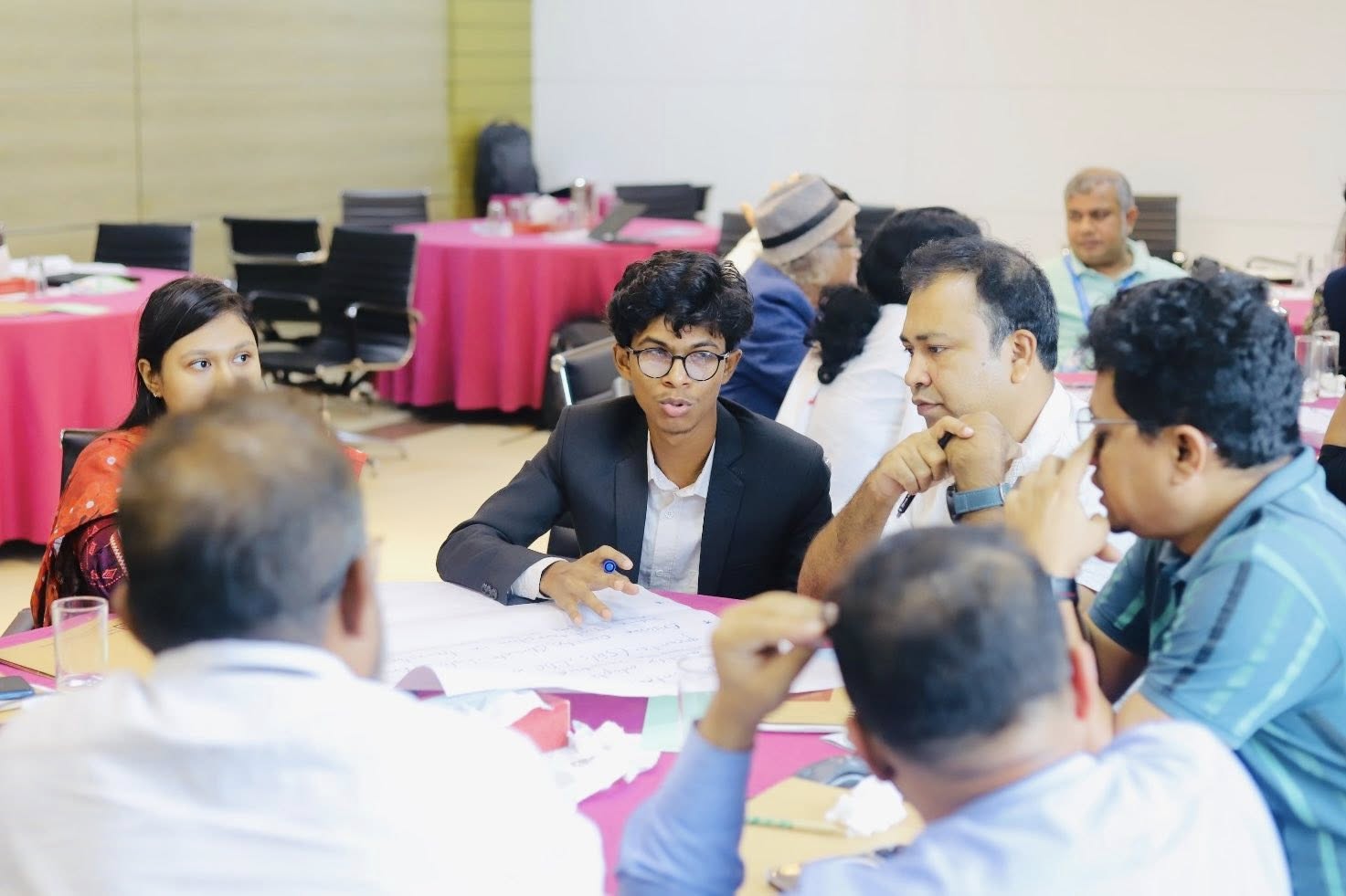
In an eye-opening session on climate finance, Dr. Suborna Barua (University of Dhaka) dissected the limitations of existing fiscal frameworks and financing gaps. These conversations directly informed group work on shaping Bangladesh’s CSO positions across five key COP30 tracks: Finance, Loss & Damage, Adaptation, Mitigation & Just Transition, and Cross-Cutting Issues (gender, rights, etc.).
Youth Leading the Intergenerational Bridge
Amidst experienced professionals and senior policymakers, YOUCAN’s presence symbolized a shift: youth are no longer outside the process—they’re co-architects of the strategy. As CSOs worked to articulate a unified national narrative for COP30, YOUCAN pushed for language that centers youth inclusion, climate justice, and the unique vulnerabilities faced by the next generation.
From highlighting locally-led adaptation lessons to contributing to strategic discussions on a just transition, YOUCAN’s voice resonated across plenary and breakout spaces. We brought field-based insights from our members in Narail, Sreemangal, and Dhaka—making clear that youth networks are not symbolic but strategic.
Looking Ahead: From Rajendrapur to Baku
The workshop closed with reflections on CJA-B’s path forward to COP30, including scope for deeper inter-CSO collaboration. YOUCAN reaffirmed its commitment to contribute to national coalition-building efforts, while also preparing to amplify Bangladesh’s youth perspectives globally, including at the COP30 youth spaces in Baku.
We extend our heartfelt gratitude to Mr. Md. Shamsuddoha (CPRD) for not only inviting YOUCAN but for creating a space that genuinely embraced intergenerational learning and power-sharing.
Final Word
The path to climate justice in Bangladesh must be both inclusive and politically sharp. YOUCAN is proud to walk that path—bringing youth not as token participants, but as strategy-makers.
🟢 To collaborate or learn more about YOUCAN’s youth-led policy work, write to us at info@youcanglobal.org