
In Bangladesh, young people are often expected to respond to crises they did not create. Climate disasters intensify, unemployment pressures grow, and communities continue searching for sustainable solutions while policy discussions remain concentrated among senior institutions and decision-makers.
Yet real change rarely begins in conference rooms alone. It begins when ideas from grassroots communities reach people with the influence to reshape systems.
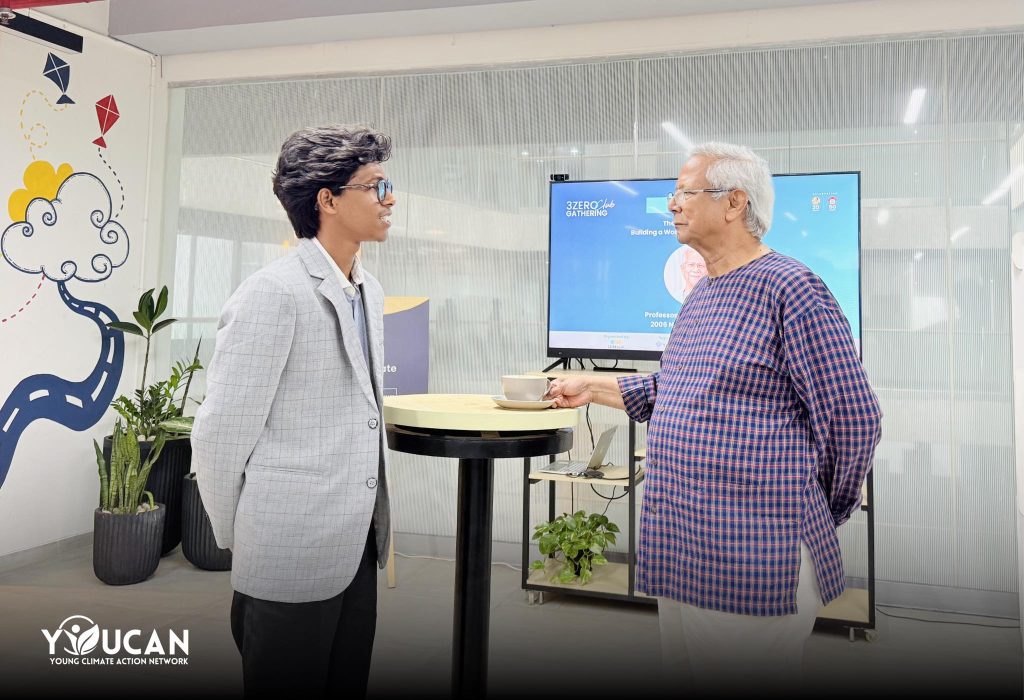
That is what made the recent meeting between Young Climate Action Network – YOUCAN and Muhammad Yunus significant.
Our Founder and Executive Director, Yudhishtir Chandra Biswas, had the honour of meeting Dr. Muhammad Yunus, Nobel Peace Prize laureate and former Chief Advisor and Head of the Interim Government of Bangladesh (2024–2026).
During the discussion, we shared YOUCAN’s vision for youth-led climate action, policy engagement, and grassroots mobilisation. The conversation focused not only on environmental challenges but also on the deeper structural issues connected to climate injustice, economic inequality, and youth exclusion from decision-making spaces.
Dr. Yunus listened with genuine interest and appreciated YOUCAN’s efforts to empower young people through community-driven initiatives and climate action. His long-standing emphasis on social business and sustainable development strongly aligned with our belief that local communities must become active participants in shaping solutions rather than passive recipients of aid.
The meeting also explored the relationship between social business, climate responsibility, and the role of youth in building a just and sustainable future. At a time when climate discussions often remain technical and disconnected from everyday realities, these conversations matter because they reconnect policy with people.
We are also proud to be engaging through the 3ZERO Club, advancing the shared vision of zero poverty, zero unemployment, and zero net carbon emissions.
For YOUCAN, this was not merely a symbolic meeting. It reinforced a broader truth: youth leadership is no longer optional in climate governance and sustainable development. Young people are already organizing communities, collecting local evidence, influencing awareness, and creating solutions under limited resources. What they require now is stronger institutional recognition and meaningful inclusion.
As Bangladesh faces increasing climate vulnerability and social challenges, collaboration between youth organizations, policymakers, and visionary leaders becomes essential. Conversations like this help create the foundation for collective action rooted in justice, sustainability, and accountability.
YOUCAN remains committed to ensuring that youth voices are not treated as background support to development conversations, but as a driving force behind them.
For more visit our Facebook page